Fellows
Our fellows are central to our scientific progress. They are the researchers who drive much of the daily work in the centre—advancing new ideas, developing methods, and contributing to our shared mission.
On this page, you can meet our Fellows and learn more about their individual areas of research.
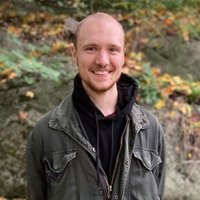
Alex Markham
Postdoc
Copenhagen Causality Lab, Department of Mathematical Sciences, University of Copenhagen, DK
Research:
Using perturb-seq data to learn causal graphical models that facilitate reasoning about regulatory pathways underlying common complex diseases.
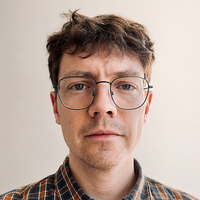
Anders Munch
Senior Pioneer Fellow
Section of Biostatistics, University of Copenhagen, DK
Research:
Developing causal inference and targeted learning for coarsened data.

Ciarrah-Jane Shannon Barry
Postdoc
National Centre for Register-based Research, Department of Public Health, Aarhus University, DK
Research:
Investigating and developing statistical and methodological approaches to enhance the accuracy and validity of genetic research findings.
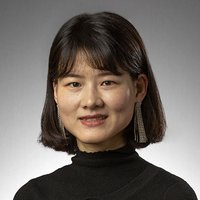
Danni Chen
Postdoc
National Centre for Register-based Research, Department of Public Health, Aarhus University, DK
Research:
Developing methods to integrate the exposome into life-course models of mental health disorders
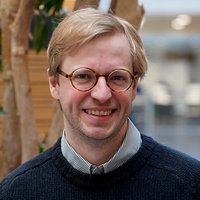
Duncan Palmer
Senior Pioneer Fellow
Big Data Institute and Department of Statistics, University of Oxford, UK.
Research:
Developing and applying statistical and computational methods to gain insight into disease mechanisms.
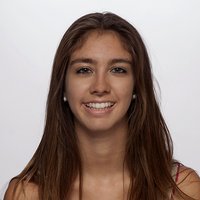
Elena Sabbioni
Postdoc
Department of Statistics, University of Oxford, UK
Research:
Quantifying the dimension of the human heritable phenome.
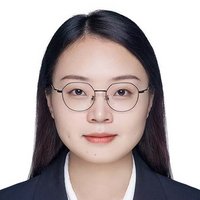
Fang Li
Postdoc
Department of Psychiatry , University of Oxford, UK
Research:
Leveraging large-scale electronic health records to identify, evaluate, and prioritize existing medications for repurposing in psychiatry.

Hanwen Xing
Postdoc
Nuffield Department of Women's & Reproductive Health, University of Oxford, UK
Research:
Investigating and developing probabilsitic and interpretable deep learning models for multiomics data.
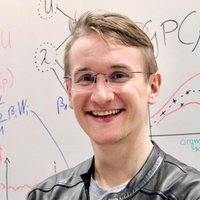
Jakob Zeitler
Postdoc
Department of Statistics, University of Oxford, UK
Research:
Investigating methods of bounding causal effects to yield more reliable statistical analysis of common complex diseases
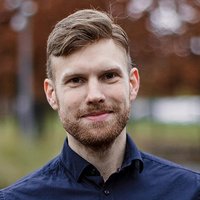
Lars Nørtoft Reiter
Postdoc
Copenhagen Research Centre for Biological and Precision Psychiatry, Mental Health Centre Copenhagen, Copenhagen University Hospital - Bispebjerg and Frederiksberg, Copenhagen, DK
Research:
Advancing precision psychiatry through predictive modeling of disease risk, treatment response, and long-term patient outcomes.
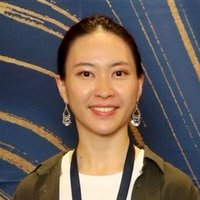
Lianyun Huang
Postdoc
National Centre for Register-based Research, Department of Public Health, Aarhus University, DK
Research:
Investigating the genetics of antidepressant response in Danish cohorts and advance methods for genetic correlation estimation.
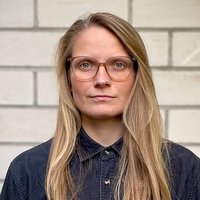
Luisa Schäfer
Postdoc
Department of Obstetrics and Gynecology, Copenhagen University Hospital Hvidovre, DK
Research:
Investigating deep learning for enhanced adenomyosis diagnosis.
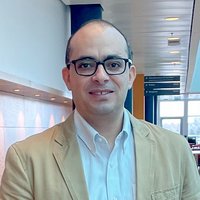
Moh Sallam
Postdoc
Center for Quantitative Genetics and Genomics, Aarhus University, DK
Research:
Developing computationally efficient, biologically relevant methods for polygenic risk scoring and fine mapping.
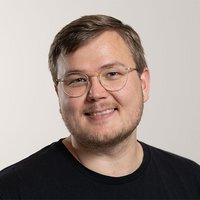
Niels Rasmus Lorenzen
Postdoc
National Research Centre for the Working Environment (NFA), DK
Research:
Developing robust models for analysis of wearable device data by leveraging self-supervised deep learning.
Nikki Hubers
Postdoc
National Centre for Register-based Research, Department of Public Health, Aarhus University, DK
Research:
Developing methods to translate genetic research into applications by integrating large-scale registry and genetic datasets.
Paweł Morzywołek
Senior Pioneer Fellow
Section of Biostatistics, Department of Public Health, University of Copenhagen, DK
Research:
Conducting research in causal and statistical inference with an emphasis on infinite-dimensional parameters and their applications to understanding common complex diseases.
Samuel Beaton
Postdoc
Department of Psychiatry, University of Oxford, UK
Research:
Developing statistical and machine learning methods to model how the brain changes across the lifespan, and how those changes relate to genetics and environment.
Shadi Zabad
Postdoc
Department of Statistics, University of Oxford, UK
Research:
Developing statistical methods and algorithms for large-scale analyses of complex traits and diseases.
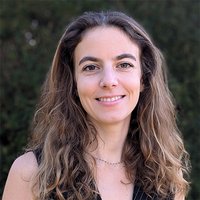
Solange Pruilh
Postdoc
Center for Basic Metabolic Research, University of Copenhagen, DK
Research:
Leveraging continuous glucose monitoring data to uncover heterogeneity and patterns in healthy individuals: towards early profiling leading to type 2 diabetes.

Xi Jia
Postdoc
Big Data Institute and Department of Psychiatry, University of Oxford, UK
Research:
Learning interpretable, generalisable representations from biomedical images and link them to genetic, clinical, and epidemiological data.
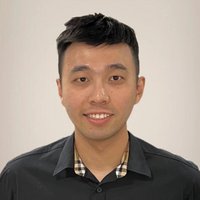
Xiaotong Wang
Postdoc
Department of Psychiatry, University of Oxford, UK
Research:
Developing statistical methods to analyse genetic data and translating the findings into clinical care through multidisciplinary integration.
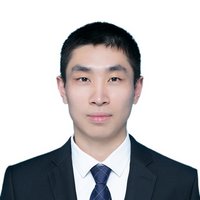
Yong Wang
Postdoc
Department of Psychiatry, University of Oxford, UK
Research:
Developing deep learning algorithms for wearable device data analysis.
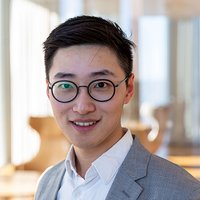
Zehao Su
Postdoc
Department of Public Health, Section of Biostatistics, University of Copenhagen, DK
Research:
Investigating efficient estimation of partial identification bounds with applications in diabetes.
The Pioneer Centre
for SMARTbiomed
We have funding to appoint Pioneer SMARTbiomed fellows – junior or senior postdoctoral researchers. We encourage applications from those with computational and methods skills whose PhD research was not biomedical, as well as those with an existing strong track record in biomedical research. SMARTbiomed will provide funding for appointments of three years.
Fellows will have agency to conduct research of their choice under the broad umbrella of SMARTbiomed research boundaries, but example projects will be listed on this site. New PhD graduates can benefit from relatively close supervision of senior researchers (Pioneer Mentors), whereas more senior postdoctoral researchers who are already established in their research journey can propose their own projects and select their own mentorship team. Each mentorship team will include senior researchers from both Denmark and Oxford and will include both methods experts and complex disease clinicians. Pioneer Fellows will be mentored towards student and postdoctoral supervision commensurate with their experience.
We anticipate that two-thirds of the appointments will be primarily based in Denmark (across multiple institutions) and all appointees will spend some time in each of Oxford and Denmark, establishing a strong network of collaboration.