SMARTbiomed summer school 2026
Causal inference
Overview
This Causal inference course will be broadly split into two modules, ‘Introduction to Causal Inference I’, and ‘Introduction to Causal inference II’ which introduce concepts and the language of causal inference, before focusing on estimation methods, as outlined below:
Introduction to Causal Inference I
This module serves as an introduction to the foundational concepts in causality and causal inference, providing participants the background reasoning needed to form estimands and discuss estimators. Over the course of two days, participants will consider what it means for an association to be causal, learn how to use potential outcomes to write a causal estimand without a link to a model, and gain an understanding of how to reason about and discuss causal effects in terms of directed acyclic graphs. Additionally, they will learn about identification of a causal estimand and how to clearly state the assumptions needed for identification. By the end of this module, participants will have a working knowledge of potential outcomes, DAGs, identification, and identifying assumptions. In addition, all participants should be able to clearly reason why an estimated association may or may not have a causal interpretation.
Introduction to Causal Inference II
This module builds upon the foundational knowledge from "Introduction to causal inference", focusing on estimation methods rather than language or concepts. Over two days, participants will explore key methodologies such as standardization (G-computation), inverse probability of treatment weighting, and simple double-robust estimators. Additionally, the module will introduce methods for using an instrumental variable for partial and point identification, estimation methods when using an IV, and the basic concepts for mediation analysis.
Prerequisites
A basic knowledge of R.
Learning objectives
Introduction to Causal Inference I
- Understand counterfactuals and causal language
- Understand DAGs in the context of causal inference models
- Understand identification and identifying assumptions
Introduction to Causal Inference II
- Understand and implement single time-point standardization.
- Understand and implement simply IPW
- Understand and implement simple parametric DR estimation
- Understand IV point and range (partial) identification and know that we are estimators for both
- Understand the basic concept of mediation and know there are differing schools of thought
Required Software
R, RStudio, and CRAN packages stdreg, stdreg2, and DAGitty.
Teachers
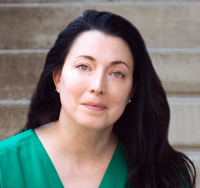
Professor Erin Evelyn Gabriel, Section of Biostatistics, University of Copenhagen
Erin Evelyn Gabriel is a co-director of the SMARTbiomed Pioneer Centre and a biostatistician with extensive experience from the U.S. National Institutes of Health, where she remains an affiliated scientist. Her research primarily focuses on causal inference, with particular emphasis on methods for nonparametric bounding of partially identified and unidentified causal effects. She leads a research group at the University of Copenhagen dedicated to developing statistical methodology for causal inference. While she has a background in infectious disease research, her recent work has expanded into the study of common complex diseases.

Professor Michael Sachs, Section of Biostatistics, University of Copenhagen
Michael Sachs is an Associate Professor in the Section of Biostatistics at the University of Copenhagen. His work focuses on developing and evaluating risk-prediction models and biomarkers, causal inference in observational studies, and statistical computing with an emphasis on reproducible research. He is also an active contributor to the R community and promotes open, transparent scientific practice.